Drainage Service in Spanish Fork, UT
Slow drains, recurring clogs, backups, roots, or a damaged sewer line all require different solutions. We find where the problem starts, show you what the line needs, and explain the options before work begins.
Complete Drainage Services for Every Spanish Fork Home
A slow kitchen sink and a root-choked sewer line can look alike from inside the house. They need very different fixes. Each service below is explained in plain terms, so you can see what fits before you pick up the phone.
See How Splish Splash Handles Everyday Plumbing →Our Drainage Services
From a single clogged fixture to a brand-new sewer line. Find your service below.
Kitchen Drain Cleaning
Our jetter service clears the grease, oil, and food buildup a basic snake or auger leaves behind.
Bathroom Sink Drain Cleaning
Removes the hair, soap scum, and toothpaste buildup slowing your sink.
Shower Drain Cleaning
Clears the hair and soap clogs that leave you standing in water.
Bathtub Drain Cleaning
Gets your tub draining fast again when the plunger falls short.
Toilet Unclogging
Gets a stubborn toilet flushing again without cracking the bowl.
Main Sewer Line Cleaning
Scheduled cleaning that clears buildup before it becomes a backup.
Sewer Backup Clearing
Clears the blockage when wastewater is coming up through your drains.
Hydro Jetting
High-pressure water that scours the full pipe wall clean.
Sewer Camera Inspection
See inside your sewer line before choosing any repair.
Sewer Line Repair
Fixes one damaged section without replacing the whole line.
Sewer Line Replacement
A brand-new line when damage runs too far to patch.
Trenchless Sewer Line Replacement
New pipe pulled through the old pipe path with minimal digging.
Sewer Pipe Lining
We create brand new pipe inside your old one, with minimal digging, and without unsightly and expensive landscape damag.
Sewer Root Removal
Cuts and clears roots before they choke off your line.
Sewer Backup Clearing Stops Wastewater From Coming Back Into Your Home
You flush the toilet, and dirty water bubbles up in the tub. That’s a sewer backup, and it can’t wait.
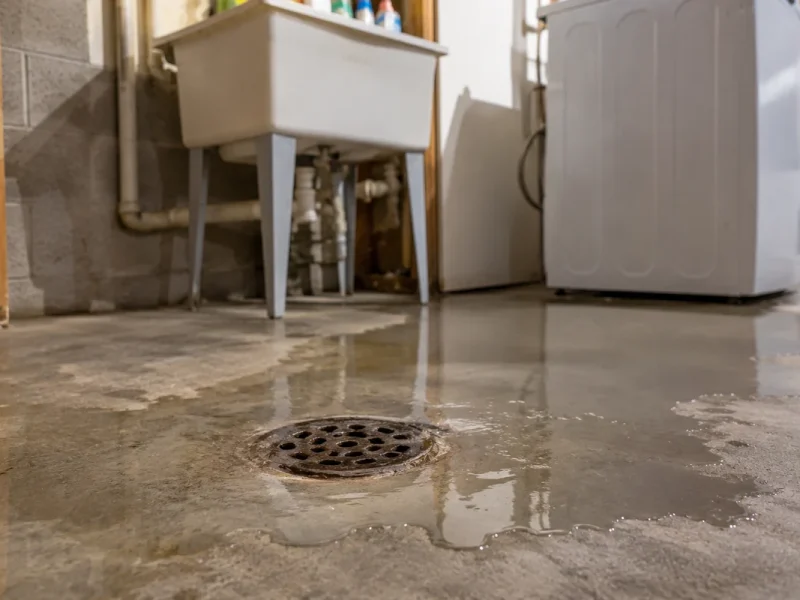
Sewer backup clearing is the response when your main line has already failed. Wastewater has nowhere to go, so it rises through the lowest drains in the house: tubs, toilets, and basement floor drains. Your first move is to stop running water anywhere in the home. Every flush or load of laundry adds to what’s coming back up.
When we arrive, we find the blockage and clear it so wastewater flows away from your home again. Then we look at why it happened. Roots, grease buildup, a collapsed section of pipe, or something flushed that shouldn’t have been can all trigger a backup. Knowing the cause tells you if this was a one-time event or a sign of a bigger problem.
Backup clearing is different from main sewer line cleaning, which is scheduled maintenance on a line that still flows. Our regular hours are Monday through Friday, 8:00 a.m. to 5:00 p.m., and after-hours emergency service is available to SplashCare members.
Main Sewer Line Cleaning Keeps the Whole House Draining
More than one drain running slow at the same time? That’s rarely three separate clogs. It’s usually the main sewer line, the single pipe that carries everything from your home to the city sewer.
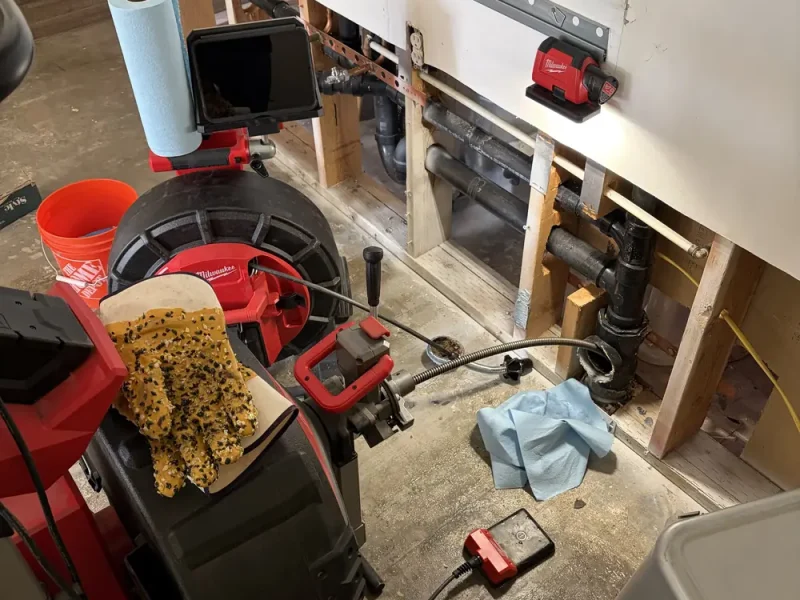
Main sewer line cleaning is scheduled maintenance on a line that still flows. We run a special camera through the full length of the line, then we cut through buildup before it turns into a backup.
Signs it’s time for a cleaning:
- Several drains slow down at once
- A toilet or tub gurgles when another fixture drains
- Water rises in the shower when the washer empties
- Nobody has checked the line in years
Homes in Spanish Fork’s older central neighborhoods, with mature trees and aging cast iron lines, tend to need this more often than newer east-side homes. It’s the step homeowners put off most, and it’s the one that saves the most hassle later.
Toilet Unclogging Solves the Most Common Drain Call
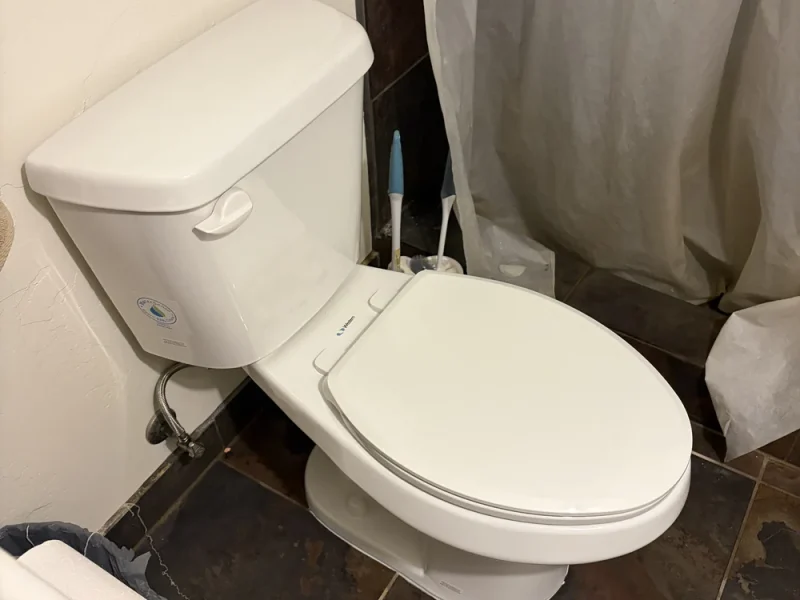
A toilet that won’t flush, or keeps backing up, is the most common drain problem in most homes. Too much paper, “flushable” wipes, kids’ toys, and hard-water buildup in the trap all play a part. We use a toilet auger built to reach past the bend in the bowl without scratching the porcelain, and most clogs clear in a single visit.
Here’s the part worth knowing. If you’ve plunged and plunged and the toilet still won’t clear, the problem may not be in the toilet. A clog farther down the main line often shows up at the toilet first, since it’s usually the fixture with the largest drain. If other drains gurgle or slow down too, the main sewer line needs a look.
Once the plunger stops working, it’s time to call. Harsh chemicals or a borrowed snake can crack the bowl or push the clog deeper.
Dealing with a backup right now?
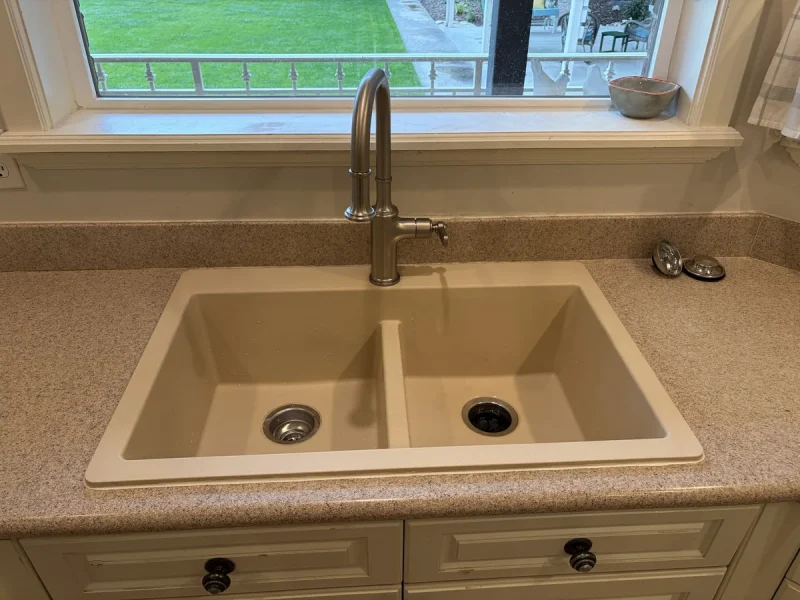
Kitchen Drain Cleaning Cuts Through Grease and Food Buildup
Dinner’s done, the dishes are stacked, and the kitchen sink just sits there full of gray water.
Kitchen clogs build differently than the hair and soap scum that block bathroom sinks, showers, and tubs. Warm grease goes down as a liquid, then cools and coats the pipe walls. Coffee grounds, rice, and starchy scraps stick to that coating, and the opening shrinks layer by layer. A garbage disposal doesn’t change that. It chops food smaller, but grease still cools and sticks.
A basic snake can poke a hole through the clog and leave the greasy coating behind. We match the cable head to the buildup, and for heavy grease farther down the line, hydro jetting may be the better fit. If the kitchen sink is slow but every other drain works fine, the clog is likely in the kitchen branch line, not the main sewer. That’s usually a simpler fix.
Hydro Jetting Scours Pipes Clean When Cabling Isn’t Enough
Main sewer line cleaning cuts a path through a clog. Hydro jetting cleans the whole pipe.
High-pressure water through a specialized nozzle scours the inside of the line and flushes out grease, sludge, scale, and root fibers. Cabling tends to leave some of that clinging to the walls, and that leftover buildup is often why the same clog returns a few months later.
Hydro jetting is a good fit if you have:
- Grease that keeps narrowing the pipe
- Clogs that return soon after a regular cleaning
- Small roots starting to grow into the line
We always run a sewer camera inspection first. It confirms the cause and shows the pipe can handle the pressure. Once the job’s done, your line is sparkling clean.
Sewer Root Removal Targets the Roots Behind Repeat Clogs
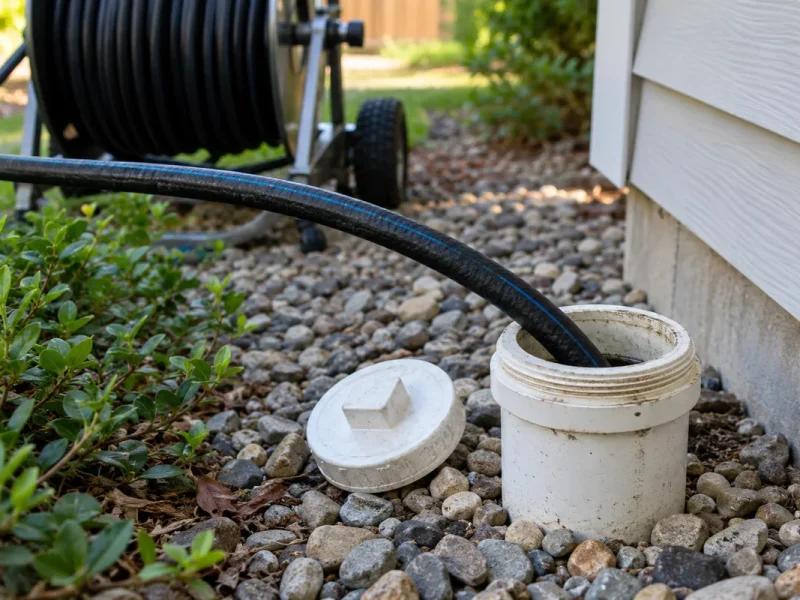
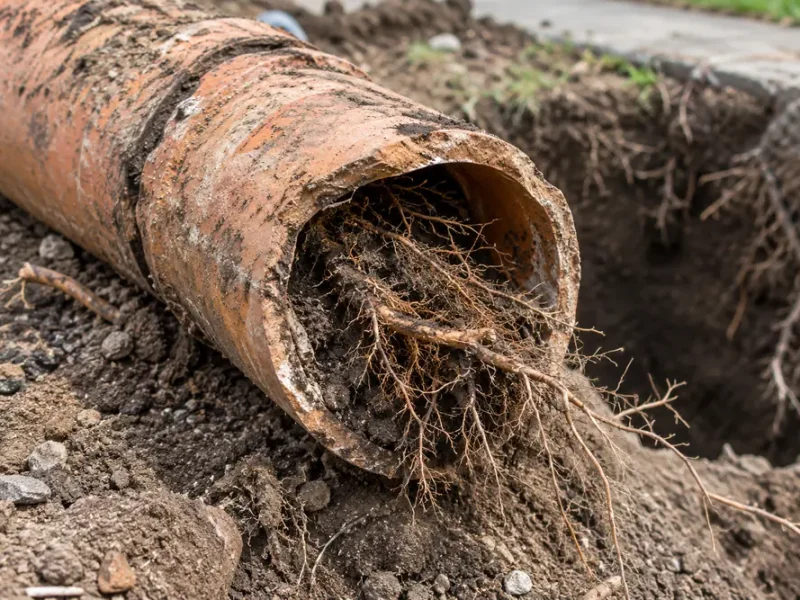
Spanish Fork’s older tree-lined streets near the historic core are lovely. They’re also where root problems show up. Roots grow toward moisture, and an aging clay or cast-iron sewer lateral with small gaps at the joints is a steady water source. Once a root gets in, it keeps growing and catching paper and waste until the line chokes off. Newer subdivisions with PVC see much less of this.
Sewer root removal goes after the roots themselves. We may use a mechanical cutter on a cable or hydro jetting to slice and flush them out, so you’ll see some overlap with main sewer line cleaning and hydro jetting. Those are the tools. Clearing the roots is the goal.
Slow drains and gurgling in a house with big trees nearby are early hints worth taking seriously. Roots that return fast or have cracked the pipe call for a camera inspection before deciding what’s next.
Sewer Camera Inspection Shows What’s Happening Underground
Your sewer line sits under your yard, and guessing at what’s down there leads straight to the wrong fix.
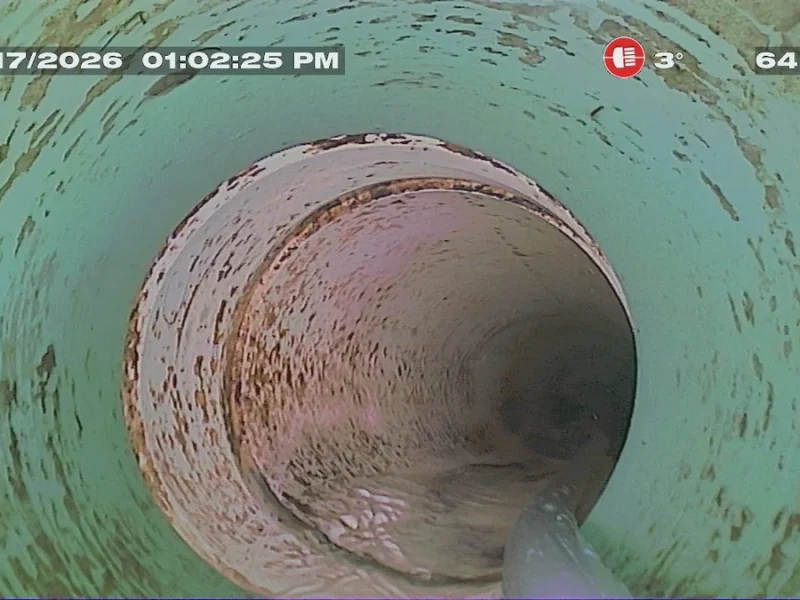
We feed a small waterproof camera on a flexible cable through your line, and you watch the footage with us in real time. It’s a diagnostic step, not a repair. It shows the problem before any repair, replacement, or root removal begins.
A camera inspection can reveal:
- Cracks or breaks in the pipe
- Roots growing in through joints
- Sagging sections where water and waste collect
- Grease, scale, or objects blocking flow
It’s worth scheduling if clogs keep coming back, you’re buying a home, or you’re weighing repair options. Spanish Fork has homes from its farming days sitting alongside houses built in the last 20 years, so the pipe under any given lot could be almost anything. Every decision you make after the camera is a better one.
Sewer Line Repair Fixes One Problem Spot and Leaves the Rest Alone
Sewer line repair targets a single damaged spot: a crack, a break, a joint that’s pulled apart, or a short collapsed section. The rest of the line stays in place.
We locate the exact problem, usually with a camera inspection, then dig down to that section, cut out the bad pipe, and connect new pipe in its place. Your yard gets one small dig site instead of a long trench.
Ground movement plays a role here. Utah County’s clay-heavy soil and the freeze-thaw cycles along the Wasatch Front shift the ground around buried pipe over time. Older lines don’t flex much, and a small shift can leave a crack or an offset joint in one spot.
Repair is different from sewer line replacement, which makes sense when damage runs so far along the line that fixing one piece at a time no longer adds up. If the rest of your line looks healthy on camera, repair is usually the simplest way back to normal.
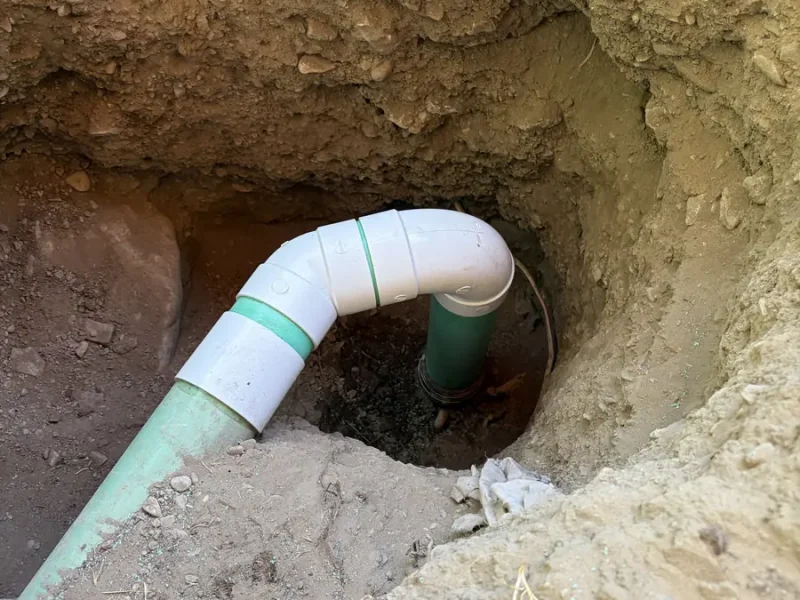
Sewer Line Replacement Gives Your Home a New Line When Repair Won’t Hold
When a line has more problems than one repair can fix, replacement installs an entirely new line from your house to the city connection. It makes sense when the camera shows damage in several spots, the pipe is badly corroded or flattened, or roots have broken through along much of its length.
Age drives a lot of these calls. Clay joints loosen. Cast iron rusts from the inside out. After decades in the ground, older Spanish Fork lines may not have enough solid pipe left to patch, while newer east-side homes with PVC rarely reach this point.
With a traditional replacement, we dig a trench along the line’s path, remove the old pipe, and lay new pipe in its place. Then we backfill and restore the ground. It’s a bigger project, and it gives your home a system built to last instead of a line patched one section at a time. If a repair will do the job, that’s what we’ll recommend.
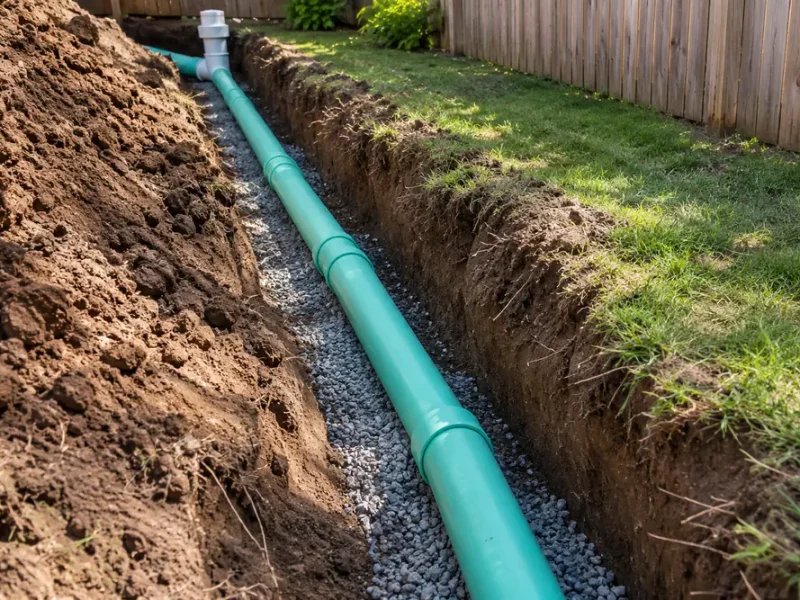
Trenchless Sewer Line Replacement Saves Your Yard and Driveway
Maybe you need a new sewer line, but the old one runs under a mature lawn, a garden you’ve spent years on, or your driveway.
Trenchless replacement still gives you a brand-new pipe. The difference is how it gets there. We dig a small access pit at each end of the line, and a tool breaks apart the old pipe while pulling new pipe through the same path. The long trench mostly goes away.
It’s easy to confuse this with sewer pipe lining, since both avoid major digging. Pipe lining rehabilitates your existing pipe by curing a new liner inside it. Trenchless replacement installs an entirely new pipe, so it can still work when the old line is too far gone to line.
Not every line is a fit. Tight bends, certain soil conditions, or a fully collapsed section can change the plan. A camera inspection tells us if trenchless will work at your home before anything gets dug.
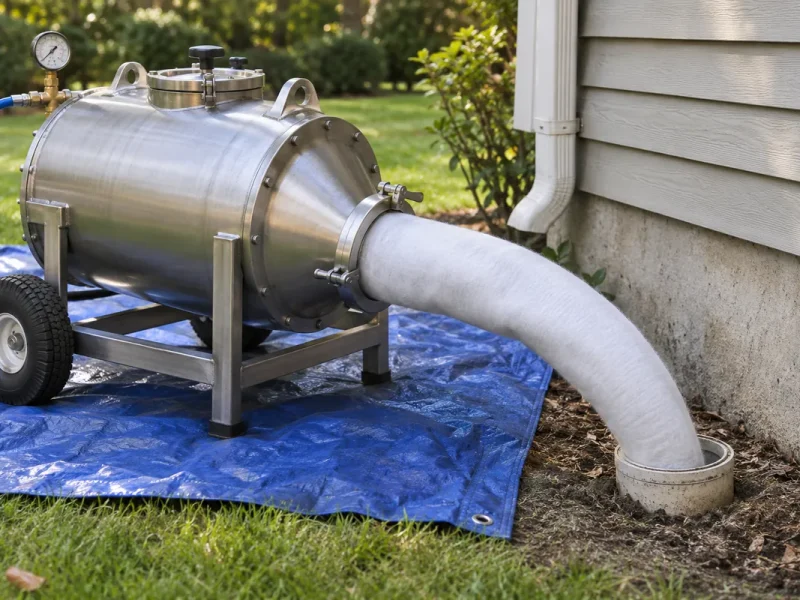
A Clear Drainage Process From Diagnosis to Done
Drain problems feel urgent. We find the source, explain what the line needs, and get your approval before beginning the work.
Tell Us What’s Happening
Let us know which fixtures are slow, gurgling, or backing up so we can start with the right diagnostic approach.
Find the Blockage
We locate the cause and determine whether the issue is isolated to one drain or farther down the main sewer line.
Choose the Right Fix
You get a straightforward explanation of the options, from standard cleaning to hydro jetting, repair, or replacement.
Clear, Repair, and Test
We complete the approved service and test the affected fixtures and line before calling the job finished.
Why Homeowners Choose Splish Splash Plumbing
A drain problem can disrupt your entire home. We make the next step simpler with honest answers, careful diagnosis, and solutions built around what your pipes actually need.
Local Owners, Real Accountability
Hunter Merrill runs Splish Splash Plumbing. The people answering for the work are the same family whose name and reputation stand behind it.
We Diagnose Before We Recommend
We identify why the drain failed—often with a camera—before discussing the repair, helping you avoid paying to clear the same problem twice.
Modern Tools, Straight Answers
Sewer cameras, hydro jetting, and trenchless methods give us better options. You’ll hear about the simplest dependable fix before anything larger.
Frequently Asked Questions
Main sewer line cleaning is for a line that still flows but is slowing down. Sewer backup clearing is the emergency call after the line has already failed. If several drains are slow but nothing is coming up through your tub or floor drain, you likely need a cleaning, not an emergency visit.
Homes near the historic downtown core often run on aging clay or cast-iron sewer lines, which are more prone to root intrusion and buildup than modern pipe. Newer east-side homes mostly have PVC lines and tend to see fewer of these issues. Where you live in town affects what your drains need.
The problem may not be in the toilet at all. A clog farther down the main line often shows up at the toilet first, since it has the largest drain. If other fixtures are gurgling too, it’s time to have the main line checked.
Choose hydro jetting if clogs keep coming back soon after a regular cleaning, or if you’re dealing with grease buildup or small roots in the line. Cabling cuts a path through a clog. Hydro jetting scours the whole pipe wall, so buildup is less likely to return quickly.
It depends on how much of the line is damaged. A single crack, break, or separated joint usually calls for repair. Damage in several spots, heavy corrosion, or widespread root intrusion points toward replacement. A camera inspection shows which one fits your line.
Stop running water anywhere in the house right away. Every flush or load of laundry adds to what’s already backing up. Then call for sewer backup clearing so the blockage can be found and cleared.
Regular hours are Monday through Friday, 8:00 a.m. to 5:00 p.m. After-hours emergency service is available to SplashCare members, so let us know your membership status when you call.
Ready to Get Your Drains Flowing Again?
Whether it’s one slow sink, a stubborn toilet, or wastewater coming up where it shouldn’t, tell us what’s happening. We’ll find the cause and help you choose the right next step.