Water Heater Repair and Installation in Spanish Fork, UT
Cold water, inconsistent temperatures, leaks, or a system that cannot keep up all point to different problems. We inspect the unit you have and explain whether repair, maintenance, or replacement makes the most sense.
Hot Water Services Matched to Your Unit
A cold shower from a gas tank and a cold shower from a tankless unit have different causes and different fixes. Our motto is “Classic Values. Modern Solutions.” For you, that means a straight answer about what your specific water heater needs, explained in plain terms.
Explore Splish Splash Plumbing Beyond Water Heaters →Our Water Heater Services
Repairs, installs, replacements, and the maintenance that keeps hard water from cutting your unit’s life short.
Gas Water Heater Repair
Gets a gas unit lighting, staying lit, and making hot water again.
Electric Water Heater Repair
Fixes failed heating elements, thermostats, and breaker-tripping units.
Tank Water Heater Installation
Sets up a new tank the right way for builds, remodels, and added spaces.
Tank Water Heater Replacement
Swaps out a leaking, rusting, or worn-out tank for a working system.
Tankless Water Heater Installation
Sized and connected on-demand hot water for homes leaving the tank behind.
Tankless Water Heater Repair
Solves error codes, temperature swings, and low flow on existing units.
Tankless Water Heater Descaling
Dissolves hard water scale from the heat exchanger to restore performance.
Water Heater Flushing
Drains mineral sediment from the bottom of your tank.
Water Heater Expansion Tank Replacement
Keeps pressure in check so your pipes and water heater aren’t under strain.
Hot Water Recirculation Pump Installation
Brings hot water to distant faucets faster and wastes less while you wait.
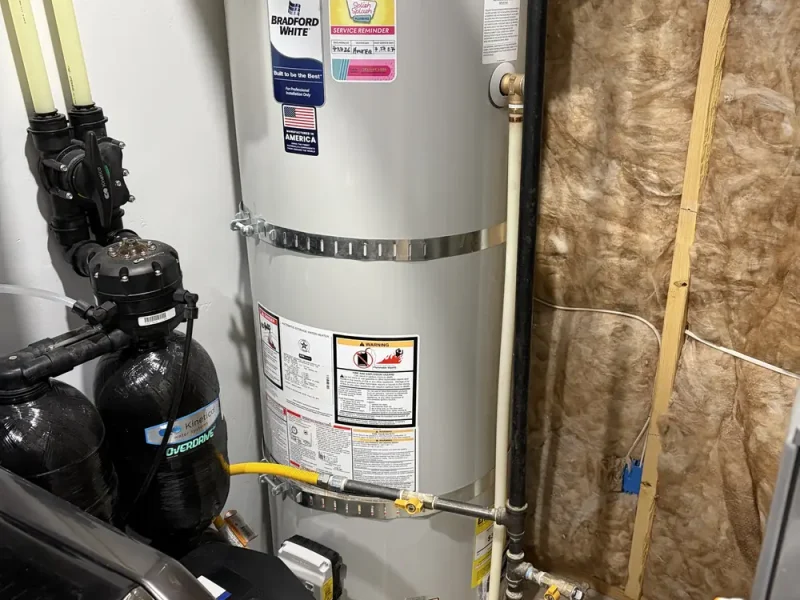
Gas Water Heater Repair Fixes Burner and Pilot Light Problems
You turn on the shower and get a cold blast. You check the water heater in the garage, and the pilot light is out again. Gas water heater repair handles this exact moment, when your unit won’t light, won’t stay lit, or isn’t making hot water.
We check the burner assembly, the pilot light, the thermocouple, and the gas valve. The thermocouple is a small sensor that tells the gas valve the pilot is lit, so the valve knows it’s safe to send gas to the burner. When that sensor wears out, the whole unit can shut down even though everything else works fine.
A gas water heater that quits doesn’t always need replacing. A worn part is often the real problem, and swapping it gets your hot water back. Gas repair also differs from electric repair, since burners, pilot lights, and venting call for their own parts, testing, and safety checks.
Electric Water Heater Repair Targets Elements and Circuits
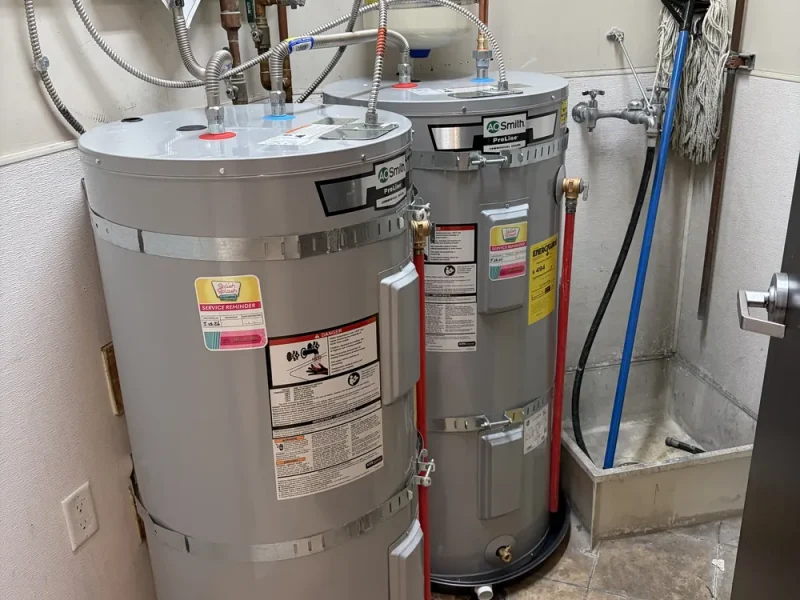
Electric water heaters have no flame, no pilot light, and no vent pipe. They run on heating elements and electrical circuits, so when one acts up, the fix looks completely different from gas work.
This service covers water that comes out lukewarm, runs cold fast, or doesn’t heat at all. It also covers a unit that keeps tripping the breaker. Most electric tanks have two heating elements, one near the top and one near the bottom, each with its own thermostat. When one burns out, you may still get some warm water, just not much of it.
We test the elements, thermostats, and wiring to find the failed part, then fix it. If your breaker trips more than once, stop resetting it. A repeat trip is the unit telling you something’s wrong, and we’ll explain what it is in plain terms.
Tank Water Heater Replacement Retires a Unit That’s Done
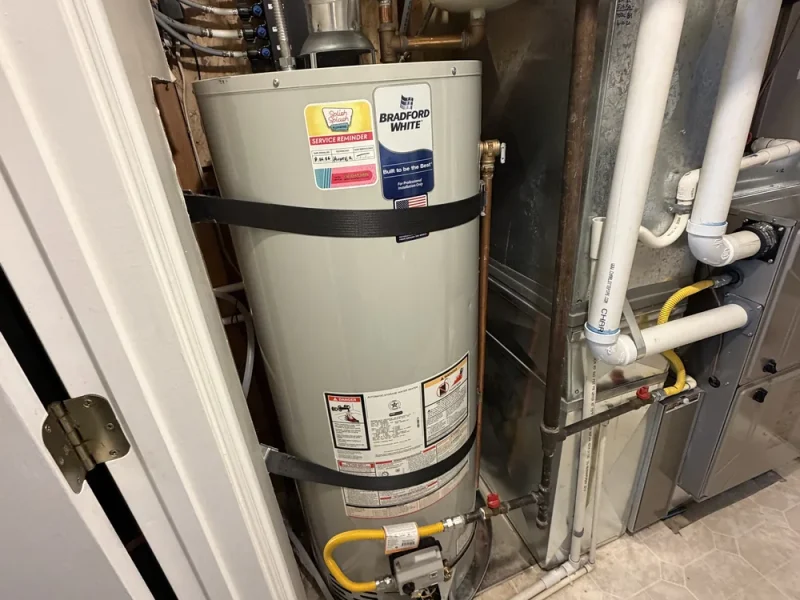
Is your tank worth fixing one more time? Sometimes it isn’t. Many older Spanish Fork homes still have original tanks reaching the end of their service life, and hard water speeds that up as sediment and scale wear on the tank year after year.
These signs point toward replacement over repair:
- Water leaking from the tank itself, not a fitting
- Rusty or brown hot water
- A unit that keeps needing repairs
- An older tank that runs out of hot water fast
Replacement includes removing the old unit, setting the new one, and connecting the water, gas or electric, and venting lines so you have a working system. A leak from the tank body is one problem we won’t patch. Once the tank itself leaks, replacement is the safer call.
Replacement responds to an existing unit that has failed. Tank water heater installation is the planned version, setting up a new unit in a new or added location like a build or remodel.
Not sure if your tank can be saved?
Tankless Water Heater Repair Solves Error Codes and Flow Problems
Tankless units are good at telling you when something’s off. A code pops up on the display. The water swings from hot to cold. The flow at the faucet drops to a trickle.
We start by reading the error code, since it points to the part of the system that’s struggling. Then we check the heat exchanger, which heats the water as it passes through, and the flow sensors, which tell the unit when water is moving so it knows to fire up.
Many tankless problems look worse than they are. A dirty sensor, a clogged inlet filter, or scale on the heat exchanger can all cause trouble that repair solves without a new unit. If your tankless system is already in place but not acting right, repair is where you start.
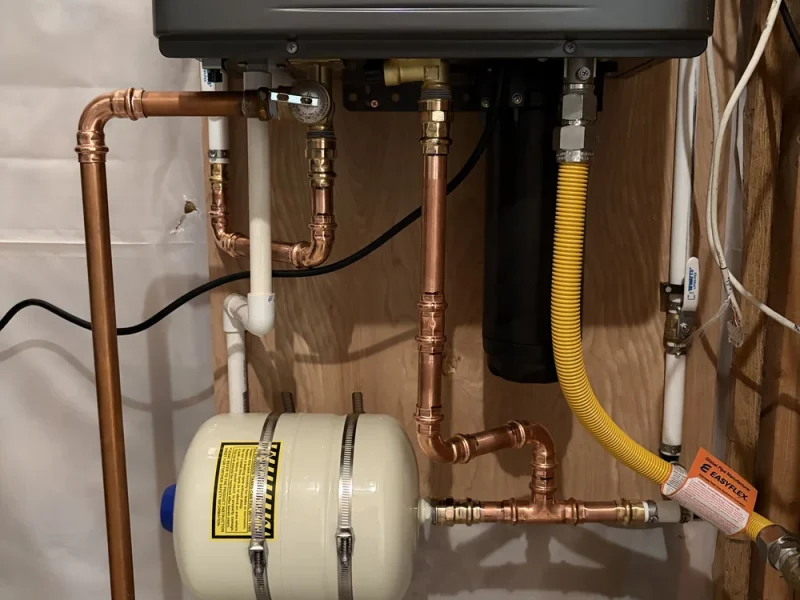
Tankless Water Heater Installation Sets Up On-Demand Hot Water
A tankless water heater heats water only when you open a tap. No storage tank sits full of hot water, and you get a steady supply for as long as you need it.
This service fits homeowners moving away from a tank system or building new. Newer construction across Spanish Fork is one reason people choose tankless, and a build is the easiest time to make the switch.
The work starts before anything goes on the wall. We size the unit to how much hot water your home uses at once, then confirm your gas line or electrical service can handle it. Sizing matters most. An undersized unit can’t keep up when the shower and dishwasher run together.
Tankless doesn’t mean no upkeep. In Spanish Fork’s hard water, plan for regular descaling from day one.
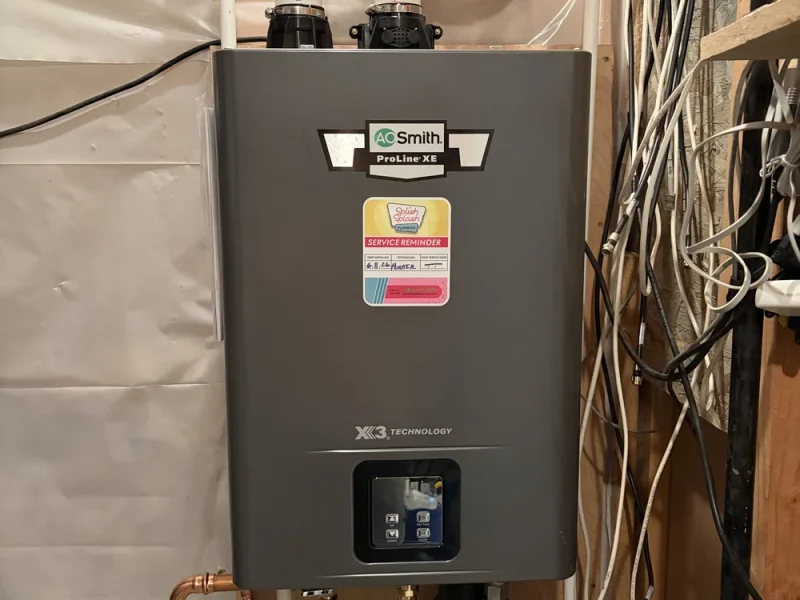
Water Heater Flushing Clears Sediment From Tank Units
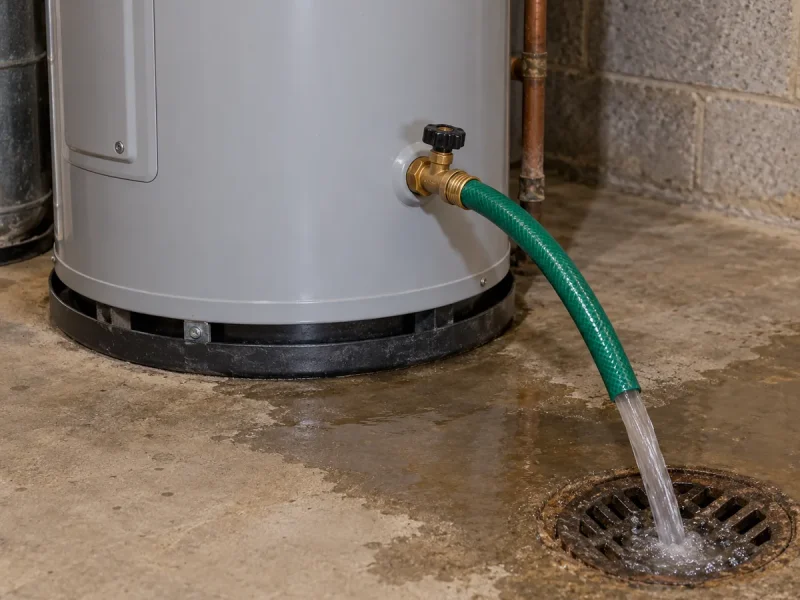
Minerals in Spanish Fork’s water settle to the bottom of tank water heaters and form a layer between the burner or element and the water. The unit works harder to heat through it, which makes regular flushing more important here than in places with softer water.
You may need a flush if you notice:
- Popping or rumbling sounds from the tank
- Less hot water than you used to get
- Water that takes longer to heat up
- No tank maintenance in a long time
Flushing drains the tank to clear out that sediment, helping the unit run efficiently and last longer. It’s a simple job that makes a real difference on a tank fighting hard water. If you have a tank, flushing is your maintenance task. Descaling is the tankless equivalent.
Tankless Water Heater Descaling Keeps Hard Water From Choking Your Unit
Many people buy a tankless unit expecting zero upkeep. In Spanish Fork, that’s not how it works. Hard water leaves scale inside the heat exchanger, so owners here need descaling on a regular schedule.
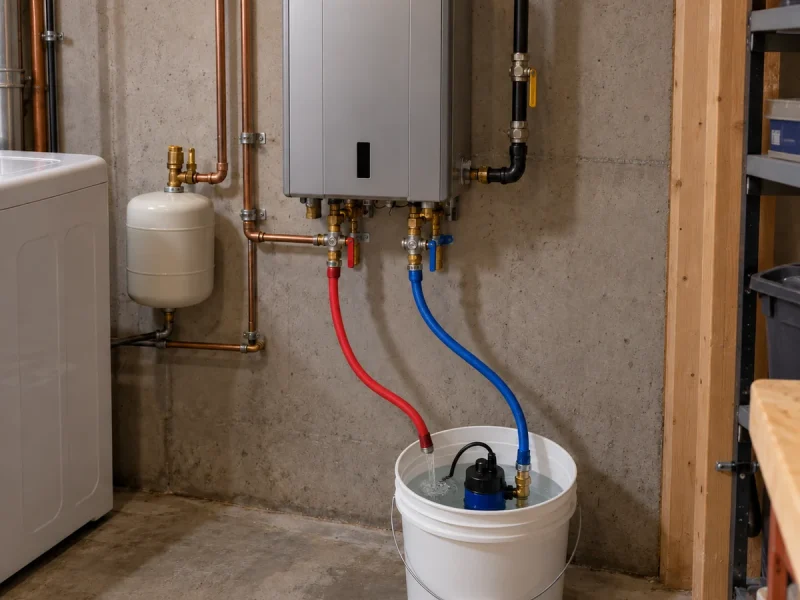
The heat exchanger has narrow passages that water flows through as it heats. When scale coats those passages, water can’t move freely and the unit works harder. You might notice lower flow, water that isn’t as hot, or an error code.
We circulate a descaling solution through the heat exchanger to dissolve the mineral scale and restore normal performance. Flushing and descaling are easy to mix up, but they solve different problems on different systems. A tankless owner who only thinks about flushing is skipping the step their unit needs.
A Clear Water Heater Process From Diagnosis to Done
We check the unit you have, explain whether repair or replacement makes sense, and get your approval before beginning the work.
Tell Us What’s Happening
Let us know whether the water is cold, inconsistent, rusty, leaking, or running out faster than it should.
Inspect the Unit
We check the tank or tankless system, fuel or electrical components, connections, and signs of hard-water buildup.
Compare Your Options
You get a straightforward explanation of the repair, replacement, or maintenance options that fit the unit and household.
Complete and Test
We complete the approved work, test the system, and confirm that hot water is flowing properly before we leave.
Water Heater Advice Built Around Your Home
The right answer depends on your unit, its condition, and what your household needs—not on selling the largest replacement.
Repair, Replace, or Maintain?
We inspect before recommending. That gives you a clear choice based on what the system can realistically deliver.
Family-Owned, Locally Accountable
Hunter and David run Splish Splash Plumbing from Spanish Fork. You work with the local family whose name and reputation stand behind the service.
We Check the System You Have
Gas, electric, tank, and tankless units fail differently. We inspect the equipment, connections, and hard-water buildup before discussing options.
Straight Answers on Repair or Replacement
A failed part does not automatically mean a new water heater. We explain when a repair should hold and when replacement is the smarter investment.
Frequently Asked Questions
Repair usually makes sense if the tank isn’t leaking and the unit is fairly young. Replacement is the better call when you see rusty water, a leaking tank, or repeat breakdowns. Spanish Fork’s hard water speeds up tank wear, so older units often need replacing sooner than you’d expect.
Yes. Hard water builds sediment at the bottom of tanks and scale inside tankless heat exchangers, and each needs different maintenance to stay efficient. If you’re choosing a new system, we’ll walk you through how each type holds up before you decide.
It depends on what’s already run to your home and how much hot water you use. Your existing gas line or electrical service often decides it for you. We’ll check what you have before recommending either option.
Call when your water heater isn’t heating, is leaking, or keeps tripping the breaker. Those are signs of a failed part. Gas units also involve safety checks around burners and venting that belong with a professional.
Replacement swaps out a failing unit already connected to your water, gas, or electric lines. Installation sets up a new unit in a new or added location, like during a build or remodel. Both end with a working system. The starting point is different.
An expansion tank gives heated water somewhere to go as it expands, so pressure doesn’t strain your pipes and water heater. If yours sounds solid when tapped, shows rust, or your relief valve drips, it may need replacing. Some homes don’t have one at all, and we can check during any water heater visit.
It varies, but hard water shortens the life of both tank and tankless units compared to areas with softer water. Regular flushing or descaling slows that down. If your unit is older and struggling, replacement is often the more practical choice.
Ready for Reliable Hot Water Again?
Whether your water is cold, inconsistent, rusty, or disappearing halfway through a shower, tell us what the unit is doing. We’ll inspect it and help you choose the right repair, replacement, or maintenance service.